 I spent this afternoon riding my bicycle down to the Quarter for coffee and beignets at Cafe du Monde, interested as I was in the tourist class on a Sunday afternoon. I had brought with me Voices from the Storm, a new collection of oral histories from New Orleanians about life pre-, during, and post-levee break. It felt an odd and unsettling confluence, my newness to the city, reading words from those for whom this place has long been home, and watching tourists sample what they’ve been told is the real New Orleans. My efforts to distance myself from the tourists struck me; I wonder when, if ever, I will have the right to call this place home. But that is a post for another time. I spent my time at the cafe reading Voices, thinking about how these are the stories of just a few folks who lost during and after the storm. These desperate experiences must be multiplied by thousands upon thousands. This is a catastrophe of incredible proportions. How do I make sense of it when in many ways I can’t even see the city they speak of? One of the men in the book talks about Dauphine Street staying dry and watching from there the waves splash in from St. Claude Avenue. So after my sugary snack, I rode down Dauphine over to St. Claude to see how the two sides of the avenue look almost three years after the storm and the breaks, trying to trace out the some of the dimensions of catastrophe with my bicycle. I stopped, at Dauphine and Poland and watched the train go by.
 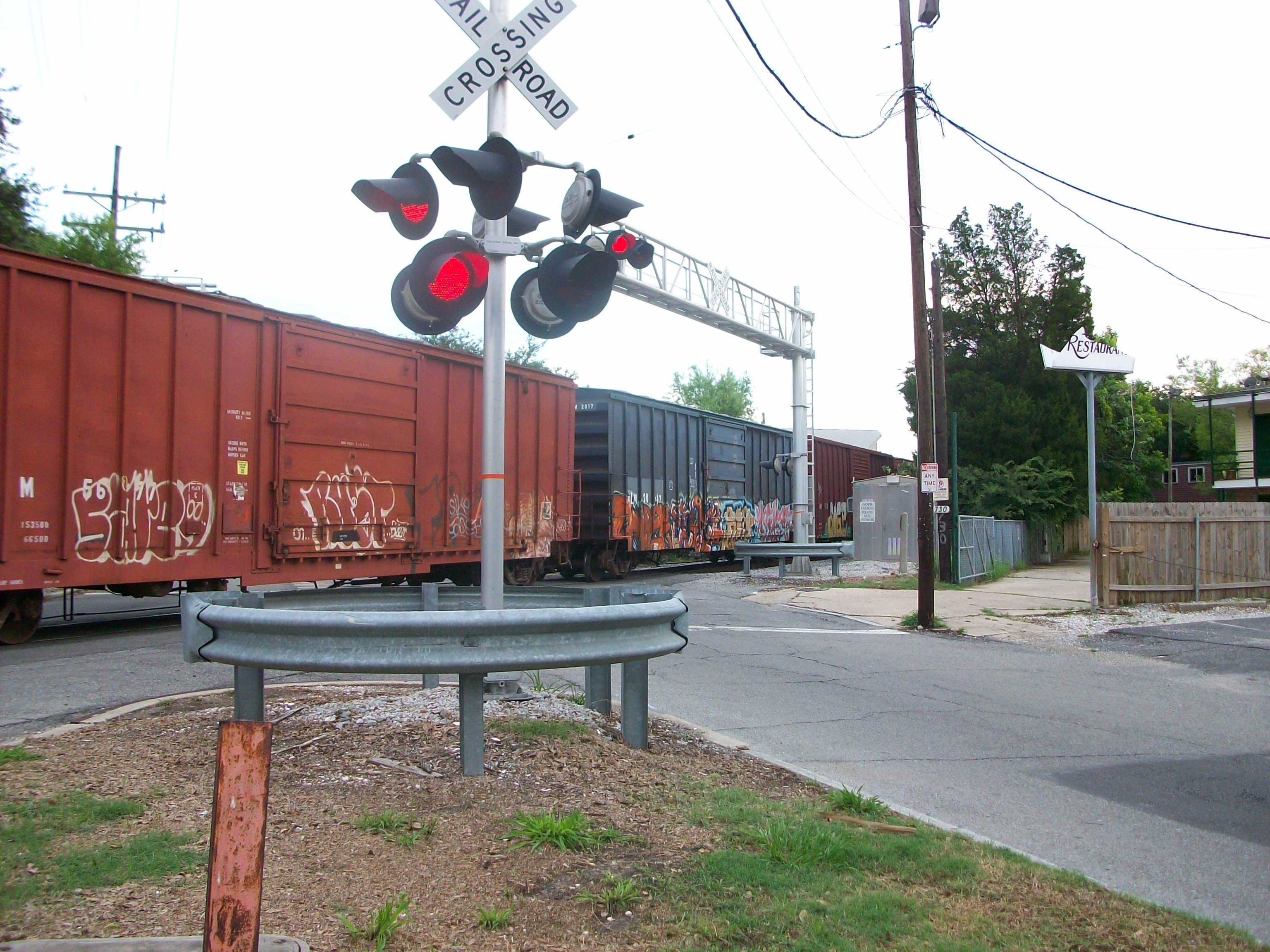 Then I went left and crossed St. Claude. And the difference between these two neighborhoods remains shocking. Both sides show the decay that is everywhere in this city; both sides have homes that are still boarded up, but the flooded side of St. Claude feels so much emptier–of plants, of people, of homes. Sure, there were lots of families sitting on porches, leaning against cars, barbecuing, and generally chilling on a Sunday afternoon as everyone does in New Orleans, but there were whole swaths of boarded up homes, desolate lots, and signs of a destruction you don’t see on the gentrified side of the lower ninth ward. That train noisly runs along the canal that breached the levees; it still sees the effects of those breaches and surely will for years as will I. I, though, can easily avoid seeing these parts of the city still abandoned to the flood. I had the privilege of making a very particular choice to go to this part of town, a privilege I forget far too easily.

 What I Saw Riding My Bike Around Today